How to curate your own algorithm and make content that matters
I know, I know! “It’s not an airport – you don’t have to announce your departure” the haters will say. And they’re right. But I did an experiment in October: deactivate the Facebook profile for the month. See what happens. And I think I just… can’t see myself going back. I feel calmer and inspired again on certain levels, interested in reading, learning, and growing personally. I’m feeling less stifled. To me it’s fascinating that a neverending scroll can feel limiting. I think it’s supposed to feel like the opposite. Maybe it did at one time. After all, I’ve been on Facebook since 2009. It was a different thing back then.
The Socially Acceptable Addiction
An addiction to social media is like an addiction to anything else, I think. There is the obvious compulsion to take part in the activity, perhaps the assertion that you can quit anytime, the flirting with leaving (“I’m just gonna remove the app from my phone”), the slow walk back (“I’ll just go to the website and check in for a sec”), the inevitable feelings of grossness because you failed, then the cycle repeats.
There is a compulsion to the behavior that a more honest part of us can see as suspect, but we totally can quit anytime! We’re going to remove the app right now… and so it goes, until we get tired of watching ourselves be disappointed by ourselves and we really actually make a move worth making. Like cutting ourselves completely off.
I just don’t want to be someone who is beholden to social media, so I am choosing to walk away. For me there is something extremely toxic about Facebook in particular; I think it might be that it tries to present as “real life”, “real people”, “real content”, when these days it’s a whole lot of recycled content from 2015 on, and Russian bots, and like 5 people you know in real life. But it used to be a lot more real. They changed it, and they lie about that fact constantly.
Facebook wants you to think they’ve curated your interests for you, and put it in this handy feed. Everything you like, packaged in a way that seems helpful, even useful. But it’s basically designed to inspire engagement, and the easiest way to engage a human is to poke at them. So it’s “titillating” content, but it’s often not real or meaningful. It’s either meant to annoy you so you’ll share it or it’s meant to preach to your choir so you’ll share it. Shareholders love engagement because it means traffic, and ad sales. It’s proof of life from John Q. Public that fills their coffers. It translates to bigger bonuses for them, and more mediocre content for us. But we’re addicted at this point so we just scroll.
The Data Farm In Your Phone
What appears in your feed is determined by an algorithm that learns some stuff about you, or thinks it does, and it does this part quickly. Heaven help you if you click on a single post showcasing a fun seasonal manicure. Now your feed is FULL of nails: long nails, short nails, flashy nails, subtle nails, the “it color” of the season, you know what I mean. We’ve all had it happen where you watch one honey badger video for just 5 seconds too long and the algorithm’s like DING!, you love honey badgers and now your whole feed is honey badgers 24/7. You’re only rescued from honey badgers when you accidentally click on someone’s floral centerpiece wedding video, which is a shame because you aren’t even planning a wedding. The next two weeks’ worth of your feed are going to make you wonder why you’re not, though, because you end up a pro at floral arrangements even if you don’t care to be. (Foliage first, then focal flowers, then filler flowers. It’s the way guys I checked.)
But much like American politics, the algorithm doesn’t unlearn or evolve very fast at all, so if you liked the 2013 movie Frozen a little too much, you may still in 2025 get hit with new renditions of Do You Want To Build A Snowman that literally no one is asking for. Remember: whether you love it or hate it doesn’t matter. It’s whether you engage with it in some way. That includes stopping your scroll to marvel, silently to yourself, at how much you hate this song before continuing on.
Facebook just watches you and records your data. Your data is worth a lot of money. A LOT, a lot. The app takes up so much space on your phone, you’d be amazed at the amount of resources they need you to have on your personal phone that you paid for so that they can rob you of your personal data.
Your data is worth so much because your habits are key to everything about you. What products and ideas to sell to you, when, how to do it, what parts to exploit, what time of day, it’s all right there for the farming. Facebook itself actually started me on this journey away from it, with my phone telling me 3 months into owning it that it was out of space. So I deleted the biggest space hog, Facebook. That was 2 years ago. I still have the same phone, never once has it bugged me again about space. But it was then that I noticed the compulsion to click an icon that was no longer there, and I became fascinated by what was obviously an addiction.
But, what are we addicted to? Is it just the scrolling? I think yes, it’s a different, more physical manifestation of the “screen saver mode” our brains naturally go into when not engaged in an activity. It happens in a split second, it’s called mind wandering, and we spend about 50% of our mental time there. It doesn’t really make us all that happy though, it’s a dull place for our brains to be, but it uses hardly any resources, so the brain hangs out there. Our brains are trainable, this is basically what meditation is about, but we have to actually do the training. We have to cultivate focus. We have to cut ourselves off, and redirect, if we don’t like what we’re seeing ourselves doing.
Start Your Own Scroll
But the thing is that I do rather enjoy scrolling. I love letting my mind wander. Nothing better than kicking back with nothing to do and nowhere to be. I just really don’t love that Facebook has co-opted my chill time and monetized it for Mark Zuckerberg’s personal gain. So I took back my scroll. I made my own feed. Maybe you’ve already noticed on your phone that whatever browser you prefer (I use Chrome) the home page is essentially your own personal feed just waiting to be customized and curated, with 30% less creepy uncle feel.
On your browser, you really can follow all the professional wedding planners, manicure blogs, keep tabs on Kristen Bell from Frozen, and you can unfollow all these things just as easily. You can Google some public figure and follow the news on them for a few days and then just… stop.
I follow historian Heather Cox Richardson this way, because in addition to her daily Letters from an American that she emails (email subscriptions- DIY a custom scroll in your Inbox!), she generates a ton of video content on YouTube that I like to watch. So I follow here at https://www.youtube.com/@heathercoxrichardson and then when she releases something new it shows up in my Google feed.
Another one I follow is Fox “News” because I think it’s fascinating how Heather Cox Richardson and Fox describe the same events.
It’s easy to see why Fox has people wrapped around their digital little finger. Something Facebook and Fox “News” have in common is the infinite scroll. You can’t hit the end on Facebook or on Fox. They’re built essentially the same: to foster bigtime engagement. Parking it on a viral song while you laugh about how much you hate it, is engagement just as sure as scrolling and scrolling and scrolling forever like a mindless right wing drone is.
The fact that you perform either behavior is exploitable and it’s clear that Fox understands this. Indeed they’ve built a mighty empire out of sharing absolute horse shit for you to scroll through. And that’s truly all it is; they don’t even cite sources or include facts sometimes. In October 2025 they shared an entire story about an Evangelical Christian woman who was up in arms about having to study a particular book in college, because it persecutes her, riling up Fox readers in the process, and the article never once mentions the title of the book she was on her fainting couch about.

But Fox is not actually news, they’re entertainment, there was an entire court case about this, so it’s OK. And people dive in. Forget about that ruling. They form opinions on half-written pieces that are missing facts and don’t even pretend to care. They’ll hijack dinner conversations about “healthcare for illegals” like they’ve really got something intelligent to say.
The Big Man In The Armchair
I think a lot of us really think we’ve got something important to say about this or that. And maybe we do. But honestly, what we think in the grand scheme doesn’t matter. What you think about what I do, share, post, or enjoy in life, doesn’t matter. I don’t mean this in a condescending way. I mean it in an empowering way. What other people think of us, and what we do, simply doesn’t matter.
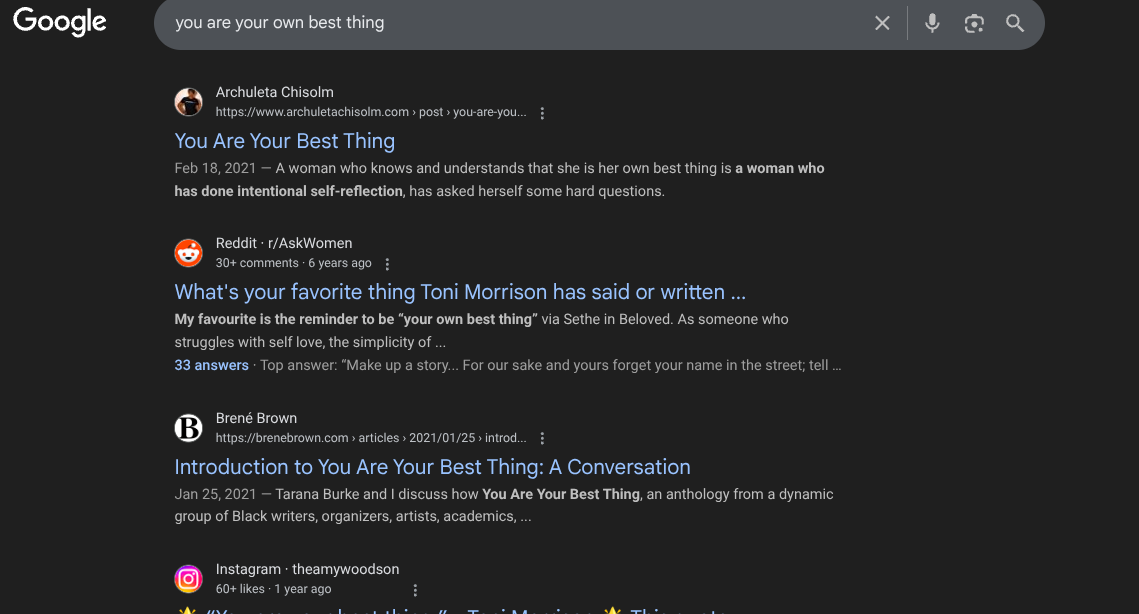
What we think of what we do is what matters. It’s literally our everything. We have to cheer for ourselves because it cannot matter (too much) what others think. We can’t make them responsible for our feelings of worth, and it can’t work in a convincing way, any other way. You are your own best thing, as Toni Morrison said.
Framed that way, honestly who cares how many likes you get for something? All it proves is that the people who engage with your stuff have the time and energy to engage with your stuff. It means they’re not doing too much with their own time at the moment, they’re basically just laying around giving a thumbs up or down.
Sure, you want your best friend and your sister to like your stuff, and you know they will. But that’s the thing: you know they will. If you want attention-getting, algorithm-changing likes, you do need volume. You need likes from people whose opinions simply can’t matter that much to you. They aren’t out there doing what you’re doing, at the moment they’re doing nothing with their time, opining on content you took time and effort to create. That you were inspired to put out into the world. Ultimately it can’t matter what they think, the number of likes, the almighty engagement, can’t be something to strive for because it’s not real. The engagement does excite the shareholders, and they do reward creators for bringing that engagement. They reward them with more exposure, so more engagement is created. They’ve stepped in the middle of you and your audience, then made you responsible for the engagement that gets Zuckerberg another plot of emergency bunker land in Hawaii.
SEO Is Search Engine Optimization – For Content – Like Your Content
If you’re a content creator, you can create your own audience my friend! That’s what SEO is all about. It’s a bit slower going, but it’s purposeful, and that’s what I’m talking about. This audience, you own. That one, Zuck does.
Of course social media can be an integral part of a greater SEO strategy. Particularly if you do it for money, you do need those likes. But the October Facebook Blackout experiment has reminded me that there’s a great big online world outside of social media, particularly outside of Facebook. A world where content is not recycled annually like clockwork, and creators seem genuinely interested in sharing something important they made, as opposed to memeing their way to a half-hearted like from a mindless scroller who never did care about flower arranging in the first place. And you love flower arranging.
Anyone can make a home for themselves on the internet, and share what’s important or interesting to them. You’re in my little corner of the internet right now. I think so much of the creative process has nothing at all to do with who lays eyes on the piece, let alone whether they “like” it. When something inside of you wants to be born, be made a real thing in the world, it kind of doesn’t matter if everyone notices. You just want the right people to notice: the ones you actually made it for.
MySpace was cool because, well, it’s baked right into the name. It was My. Space. We could customize it with wallpaper, a song that played when people arrived on the page, and a lot more. A friend who first explained it to me called it “your own mini website” and I think that’s a pretty apt description. In the beginning Facebook was a bit like that too, no music or wallpaper, but it was still nice to connect with old friends and it felt like a great place to keep photos and share stuff that was going on in your life. Like a mashup of MySpace and Livejournal (Hi I’m old). Your own personal space on the internet, public, but intimate at the same time. What an opportunity for exploitation. They could not help themselves.
The SEO of LLMs – Poke People Yourself
It’s not just social media, indeed all behaviors, everywhere, all the time, are quantifiable data that can be used to disperse ideas and inform marketing decisions that shape our way of life. LLMs (Large Language Models) offer an interesting way to step around the data gathering machine.
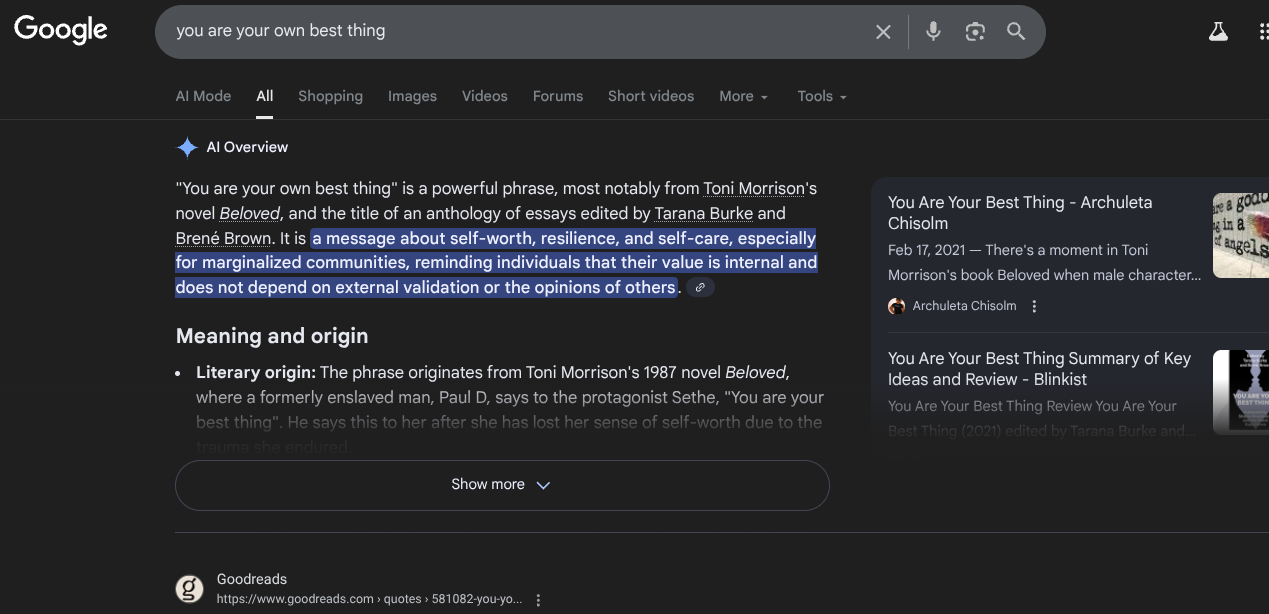
These days, when you Google something, at the top of the SERP (Search Engine Results Page), you get an AI summation of search results. Why click into various other results, giving those websites the traffic, when Uncle Google can summarize all of the basic answers to your search question and steal that traffic for himself?
Google’s shareholders want the same thing Facebook shareholders want: engagement. By staying on the results page, and not clicking away, you engage with that page and you pat Google on the head, letting him know he did a good job. Google gets in the middle of your interaction the same way Facebook does.
But content creators with in-depth knowledge on a topic, truly compelling things to say (as opposed to a rewording of a Bored Panda article), a dissenting point of view, postmortem data on their own projects, case studies, customized workouts not cut and pasted from others, whatever ISN’T easily summed up by the LLMs, whatever isn’t necessarily a high value keyword for everyone but is definitely high value for that creator, they get the right traffic. The people they made the thing for, they find their way right to them. Why? Because LLMs are basic. And real, creative, high-vibing, inspiring people, ideas, and content, are all anything but basic. LLMs aren’t built for magic, but humans? The magic is right there in our bones. We’re absolutely built for it. We’re very hard to sum up.
Make It Work For You
Even if you’re not a content creator, you’re most certainly a connoisseur of fine online content (you’re here aren’t you?). You too can curate your experience in life, online and off. Anyone can. Remember how much memory Facebook eats up? Other apps do too. You can just delete those. Better yet, get a flip phone. Phones don’t really need the internet to function as… well… phones. Most of us don’t actually need Uber, we can hail a cab if we want, or phone one, they’re almost always at the ready.
But, maybe Uber does make the most sense for you. That’s the thing, you get to decide. It’s one of the only nice things about adulting, and I fear that we often relinquish that real and important power to decide what we want and how our lives will go. In tiny ways, all the time, we acquiesce. Accepting a 25 page TOS we don’t read. Another “nominal” fee hike. More restrictions that serve your boss not you. And we just kind of let it all slide.
For you, maybe NetFlix honestly is worth another bump in monthly cost. For me, in the olden days it started out with DVDs in the mailbox at $9.99 per month and was up to $16.99 before I finally started asking what NetFlix was actually contributing to my life and my story as a person. I replaced NetFlix with DuoLingo and just passed a milestone 150 days in a row of Spanish practice because I decided one day that NetFlix does not deserve my attention any longer.
But that’s a story about me, and of course you’ve got to do you. My question is whether indeed you are… doing you? Do your social media (and other) habits serve you, or do they only serve you up on a platter for someone else? Did you want to spend your hard-earned cash on that new phone, or did you feel compelled by an external force to get it? Does the way your life is organized bring you peace, and joy, and most important of all, a sense of control? Did you make this life yourself, with on-purpose pieces? Are you driving it? Or do you feel like you’re just going through the motions of it? This is on my mind a lot lately, as I wrest control of my life, and my time each day, from the oddest places. Facebook. Psh. I’m repo-ing those hours. Yoink!
If you like this blog, please subscribe! Then you’ll know when I write more of them. I hope my blogs add something to your life: inspiration, ideas, creativity, perspective, more questions, to me it’s all good if it makes us think. Relationships are where we go to give more than we take.
I’ll leave you with a poem I really like called “Frida Kahlo to Marty McConnell” written by Marty McConnell, about leaving a toxic relationship, actively working to remove the presence from one’s life, moving forward anew, and making emotional space to heal, find your heart, and your creative center again.
Frida Kahlo to Marty McConnell
by Marty McConnell
leaving is not enough; you must
stay gone. train your heart
like a dog. change the locks
even on the house he’s never
visited. you lucky, lucky girl.
you have an apartment
just your size. a bathtub
full of tea. a heart the size
of Arizona, but not nearly
so arid. don’t wish away
your cracked past, your
crooked toes, your problems
are papier mache puppets
you made or bought because the vendor
at the market was so compelling you just
had to have them. you had to have him.
and you did. and now you pull down
the bridge between your houses.
you make him call before
he visits. you take a lover
for granted, you take
a lover who looks at you
like maybe you are magic. make
the first bottle you consume
in this place a relic. place it
on whatever altar you fashion
with a knife and five cranberries.
don’t lose too much weight.
stupid girls are always trying
to disappear as revenge. and you
are not stupid. you loved a man
with more hands than a parade
of beggars, and here you stand. heart
like a four-poster bed. heart like a canvas.
heart leaking something so strong
they can smell it in the street.


Leave a Reply